
Research Colloquium Summer Term 2026
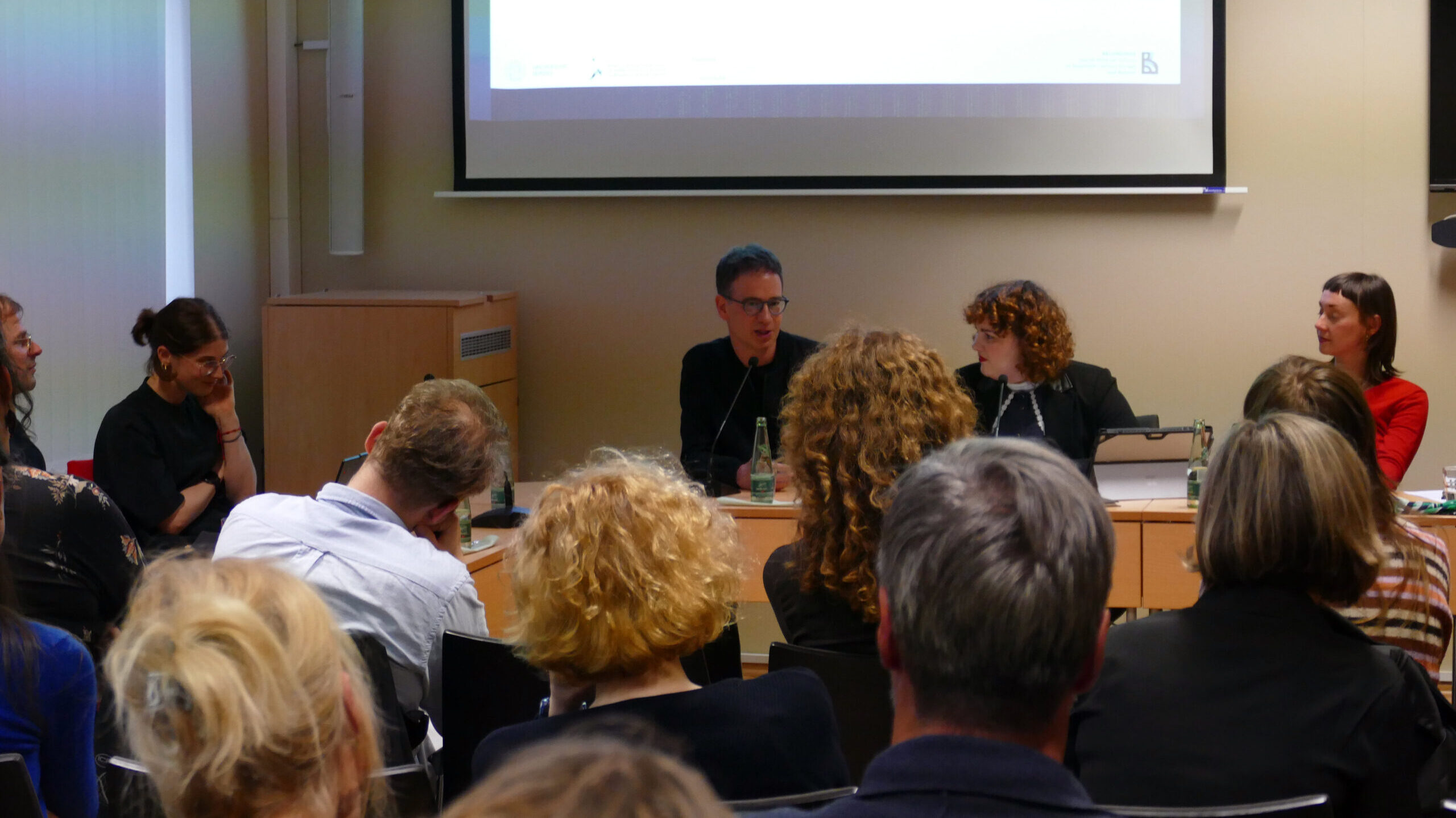
The opening of this year’s research colloquium, “Passing Through Hands: Objects in Jewish Everyday Lives,” organized by the Simon Dubnow Institute in cooperation with the IRTG “Belongings: Jewish Material Culture in Twentieth-Century Europe and Beyond,” took place on May 7. The event began with a lecture and conversation with Mikołaj Łoziński about his book „Książka“.
Following welcoming remarks by Dr. Elisabeth Gallas and Prof. Dr. Anna Artwińska, Katarina Rakić and Laura Schilling opened the research colloquium before handing the microphone to their colleague, Carolin Heymann-Serota, who moderated the conversation with Mikołaj Łoziński.
Łoziński began by introducing the audience to the backstory of his book, „Książka“. While working for a blind psychoanalyst in Paris, the analyst asked him about his family’s history. Only after repeating the story four to five times did Łoziński realize that she was hinting for him to cope with his family’s history, which is torn between Poland and France, Judaism and communism. It was then that he decided to explore “the baggage” of his grandparents’ and parents’ experiences. For Łoziński, writing „Książka“ meant examining family dynamics more broadly. Initially, his family was excited about the book, but they soon became concerned about how they might be portrayed. This is why he refers to the black pages in his book, which recount conversations with his family members about the book, as the “pages of censorship.” Additionally, his fictional stories began to blend into reality when his father recounted one of them as if it had really happened.
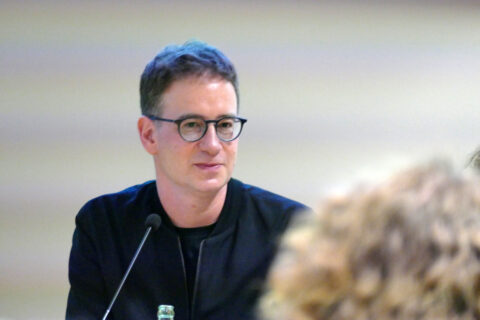
Mikołaj Łoziński – Photo by Dubnow Institute
As a Polish Jew, Łoziński reflected on the fact that Polish Jews don’t have objects handed down to them. To him, valuable objects are personal items that evoke memories of family members. By writing “Książka,” which translates to “book,” Łoziński created another Jewish object that can be added to the list of things that shape and belong to his family and preserve their memory.
Audience members had the opportunity to listen to the chapters “Drawer,” “Dad,” “Glasses,” and “Older Brother” read to them in Polish by the author and in English by Katarina Rakić. The following questions addressed the symbolism of objects representing relationships, family dynamics, and the loss and vulnerability of family members, all of which were depicted through the objects in the book.
Text by Carolin Heymann-Serota