
Research Colloquium Summer Term 2026
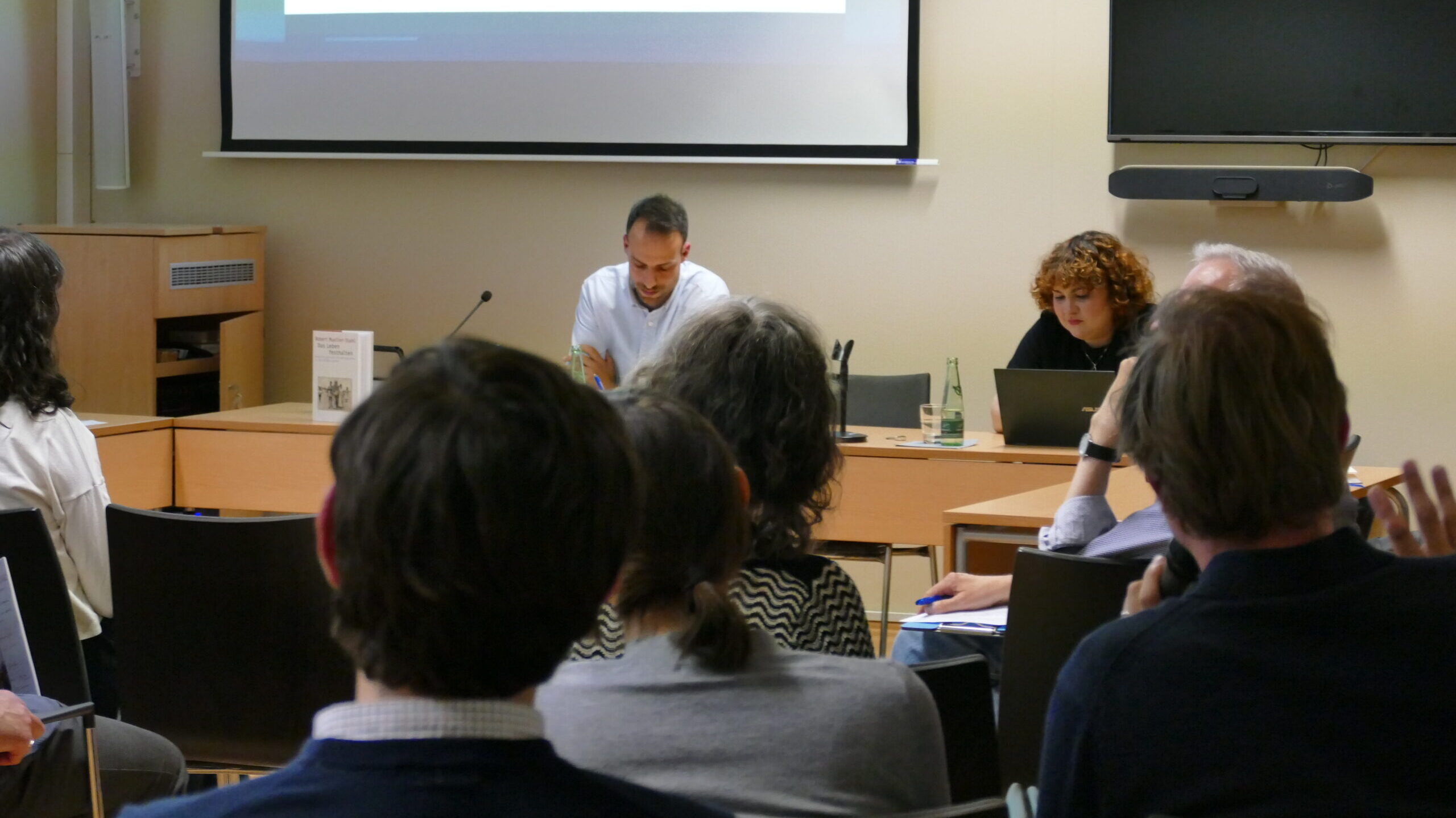
The second event of the Research Colloquium Passing Through Hands: Objects in Jewish Everyday Lives, organised by the Dubnow Institute in cooperation with IRTG Belongings, took place on 21 May 2026. The evening opened with welcoming remarks by Laura Schilling, after which the guest speaker, Robert Mueller-Stahl from the Leibniz-Zentrum für Zeithistorische Forschung in Potsdam, delivered a compelling lecture on Jewish Private Photography in 1930s Germany.
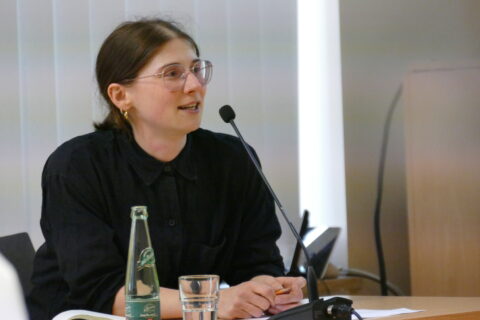
Laura Schilling, Photo by Dubnow Institute
The lecture was based on his recently published book Das Leben festhalten. Deutsch-jüdische Privatfotografie in den 1930er Jahren. Focusing on family albums, Mueller-Stahl explored how sources that do not explicitly depict major historical events can nevertheless reveal broader social and political transformations. He demonstrated how seemingly ordinary images can serve as a lens through which processes of exclusion, persecution, and forced migration of German Jews under National Socialism may be examined.
The author pointed out that all these albums were intentionally saved, preserved, hidden, or even buried by their owners, and then donated to the archives or museums, which adds another important layer to their historical and material significance. In his approach to the photographs, he emphasised the importance of reading them within the broader context, paying close attention not only to the individual images themselves, but also to their visual arrangement and placement within the albums.
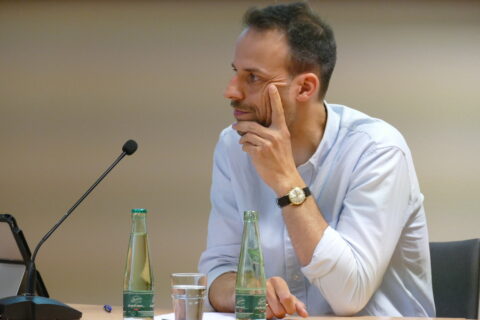
Robert Müller-Stahl, Photo by Dubnow Institute
Mueller-Stahl highlighted several central conclusions emerging from his research. Private photographs document Jewish everyday life while simultaneously reflecting the changing position of Jews within German society. At the same time, they indirectly reveal experiences of exclusion and persecution during the Nazi period. Finally, he argued that photography functioned as a medium of self-determination and self-identification, expressing a continued sense of belonging to society.
The lecture was warmly received by the audience and was followed by a lively discussion. The question session, moderated by Katarina Rakić and Carolin Heymann-Serota, focused on the possibilities and limitations of visual media in representing broader historical contexts, as well as the role of photography in capturing everyday moments and shaping memory.
Text by Alicja Markowska