
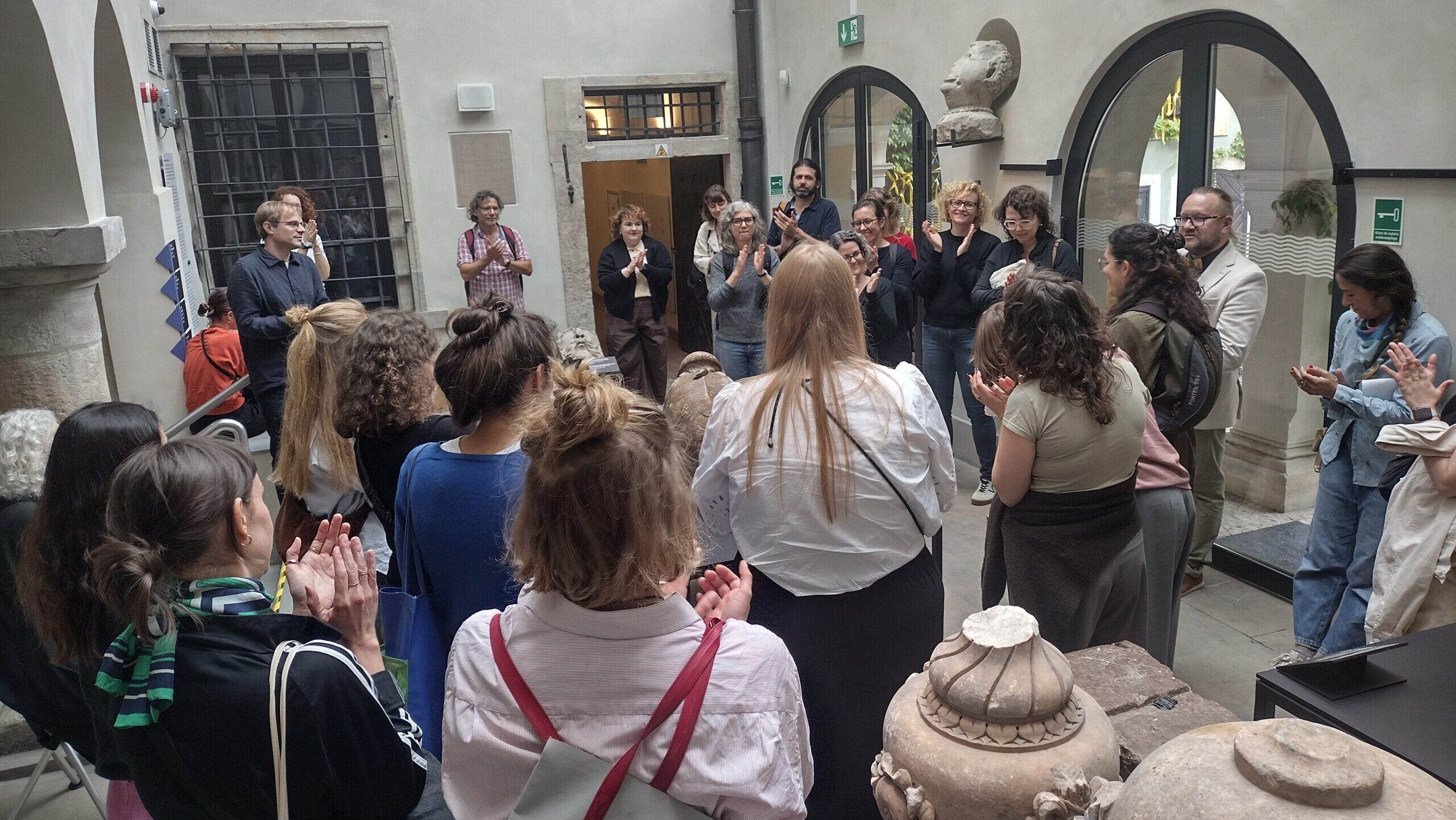
From 6 to 15 July 2026, the International Research Training Group Belongings: Jewish Material Culture in Twentieth-Century Europe and Beyond held its Summer School in Warsaw. The programme brought together doctoral researchers and PIs of the IRTG for ten days of intensive engagement with Jewish history, memory and material culture, in different research institutions, museums and memorial sites in Warsaw and its surroundings.
A particular focus of the Summer School was placed on exhibition practices. We spent substantial time at the POLIN Museum of the History of Polish Jews, the Jewish Historical Institute, and the Museum of Warsaw. Through lectures, guided tours, and discussions with museum professionals and scholars, we gained insights into the history and institutional development of the museums, their approaches to presenting Jewish history and culture, and the challenges involved in developing exhibitions on complex and often contested histories. We also learned about different exhibition concepts and curatorial approaches, including questions of how objects, spaces, images, and narratives can be brought together to communicate historical experiences to diverse audiences.
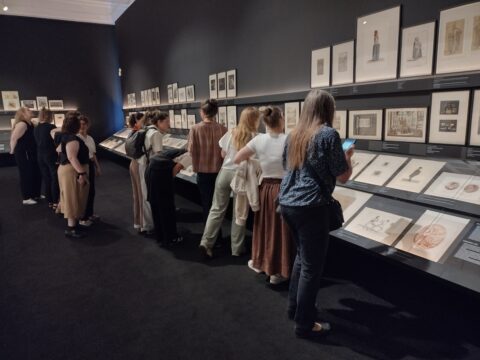
Guided tour of ‘Berlinka’ exhibition in Jewish Historical Institute
The programme also extended beyond museum spaces. Several guided tours introduced us to the history and material traces of Jewish life in Warsaw, with a particular focus on the Muranów district and the former Jewish quarter. We visited the Warsaw Jewish Cemetery and explored the ways in which places, buildings, monuments, and other material remains shape the memory and understanding of the city’s Jewish past.
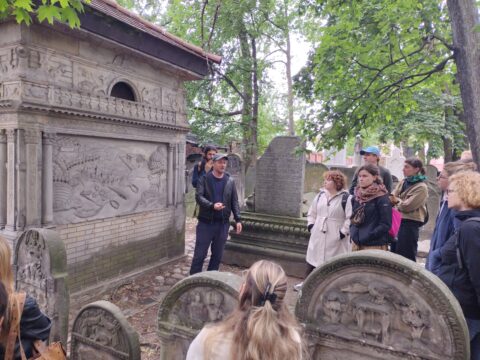
Guided Tour of Warsaw Jewish Cemetery with Witold Wrzosiński
Further excursions took us beyond Warsaw. During a trip to Otwock, we explored sites connected to the history of Jewish life in the region. Another excursion led us to the former extermination camp at Treblinka, where we reflected on the history of the site, the absence of the material traces, and the significance of the site as a place of memory.
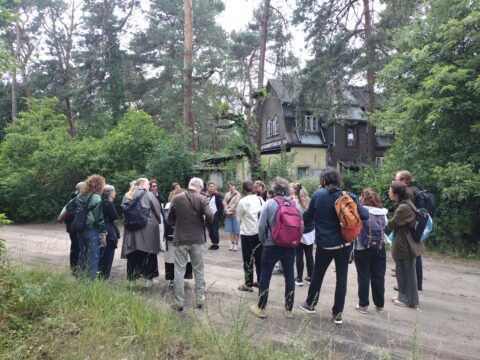
Touf of Otwock with Piotr Paziński
Throughout the Summer School, the combination of academic presentations, museum visits, guided tours, excursions, and discussions offered an opportunity to approach Jewish history and material culture from a variety of perspectives and to delve into the complex and contested negotiations about the significance and place of Holocaust memory among Poles, Germans and Jews. The programme also provided ample opportunity for the doctoral researchers to discuss their own research projects and to exchange ideas across the different clusters, with the PIs of the IRTG and our guests.
We would like to express our sincere gratitude to all the scholars, museum professionals, lecturers, and guides who contributed to the Summer School and generously shared their knowledge and expertise with us. Their insights and willingness to engage in discussion made the Summer School an enriching and inspiring experience for everyone involved.
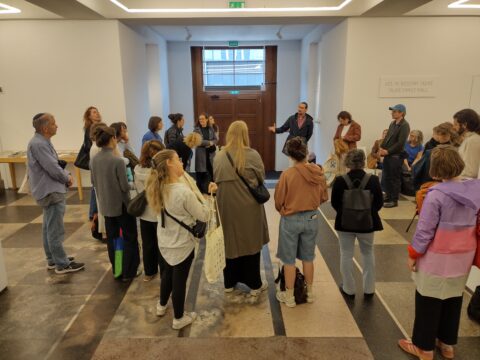
Tour with Szymon Pietrzykowski starting at the Jewish Historical Institute